Earned Automation: A Framework for Introducing Agentic AI Without Losing Human Trust
A service design research project partnered with JPMorgan Payments exploring how agentic AI can be introduced in ways people actually trust and adopt
My Role:
Research Synthesis
Framework Wizard
Stakeholder Communication
Northwestern Engineering Design Innovation
Service Design
Winter 2026
SUMMARY
The brief: JPMorgan Chase was already building the payment infrastructure for agentic AI and tasked us with identifying the human-centered use cases for when and how people would adopt it within ecommerce systems.
The tension: The more autonomy we gave AI in early concepts, the more distrust we surfaced from users. Effort was not the problem to solve. In certain contexts, effort is the point.
The direction: A sequential adoption framework where AI earns expanded capability one successful interaction at a time, introduced through channels users already trust.
EARLY RESEARCH
Approach
We conducted six co-creation interviews with adults 65+ who actively host and plan celebrations. Sessions were held virtually, with participants mapping their own planning journey on a shared Miro board in real time.
We focused on:
The full arc of how they planned a celebration
The tools and technologies already in their lives, from email to smartphones to LLMs
Where the process felt hardest or broke down
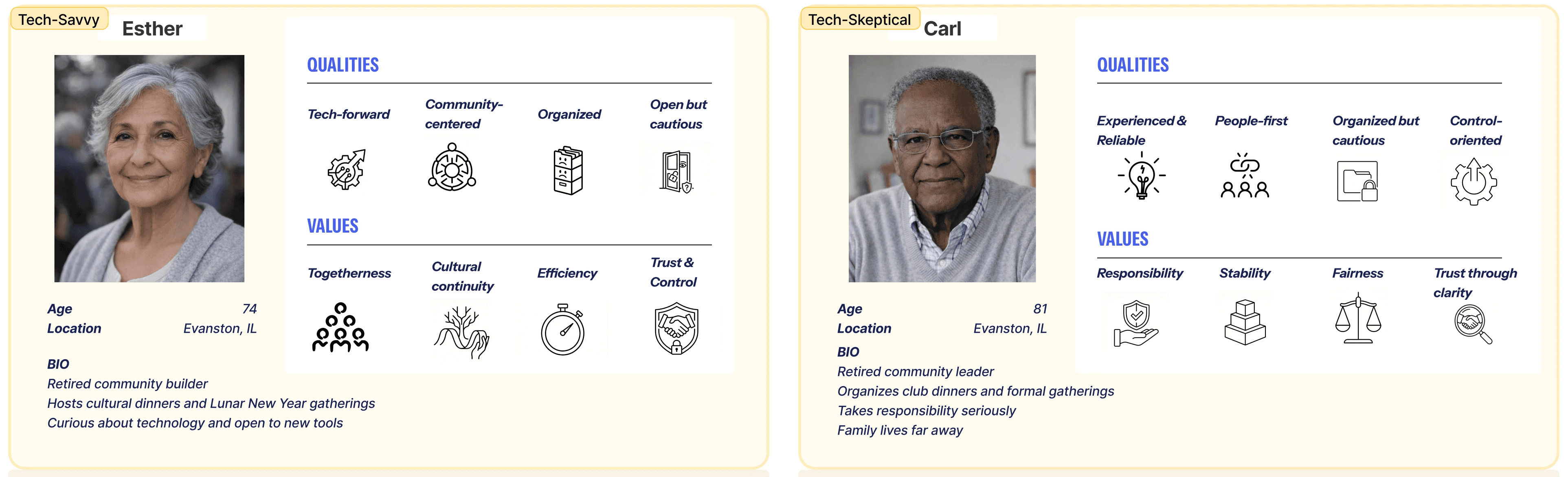
two personas reflect our interview findings
Service Design Frameworks
To understand the full ecosystem around our primary user, we built out a series of service design artifacts that mapped relationships, motivations, and potential failure points.
Service Safari: firsthand observation of existing celebration planning tools and services to ground our concepts in real-world context
Actors Map: a systems-level view of every entity orbiting the older adult host, from co-hosts and local vendors to payment ecosystems and financial institutions, mapped by power and knowledge
Stakeholder Map: a deeper look at the needs, benefits, contributions, and risks of each actor in relation to the primary user and the agentic AI system
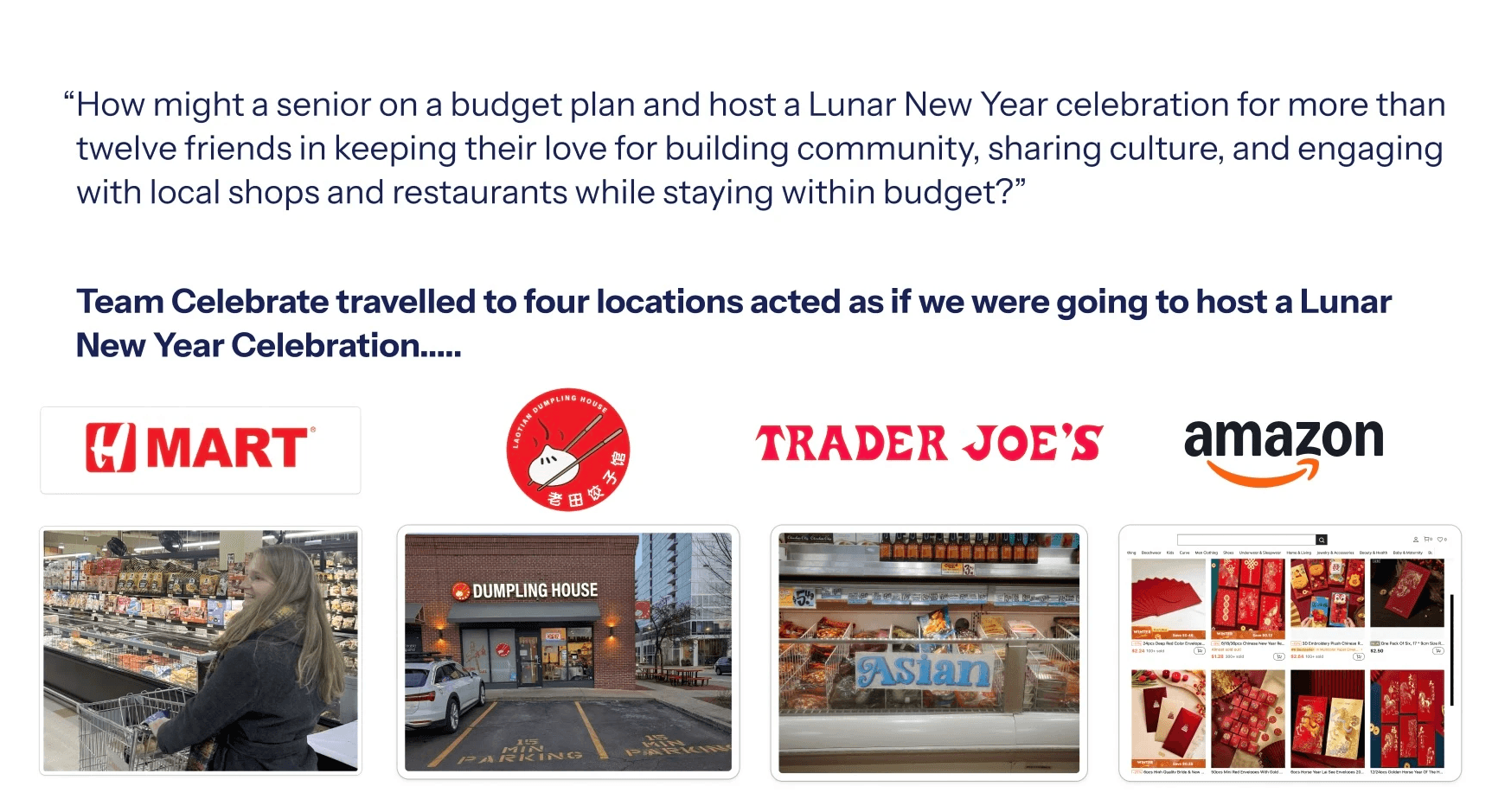
Service Safari Presentation
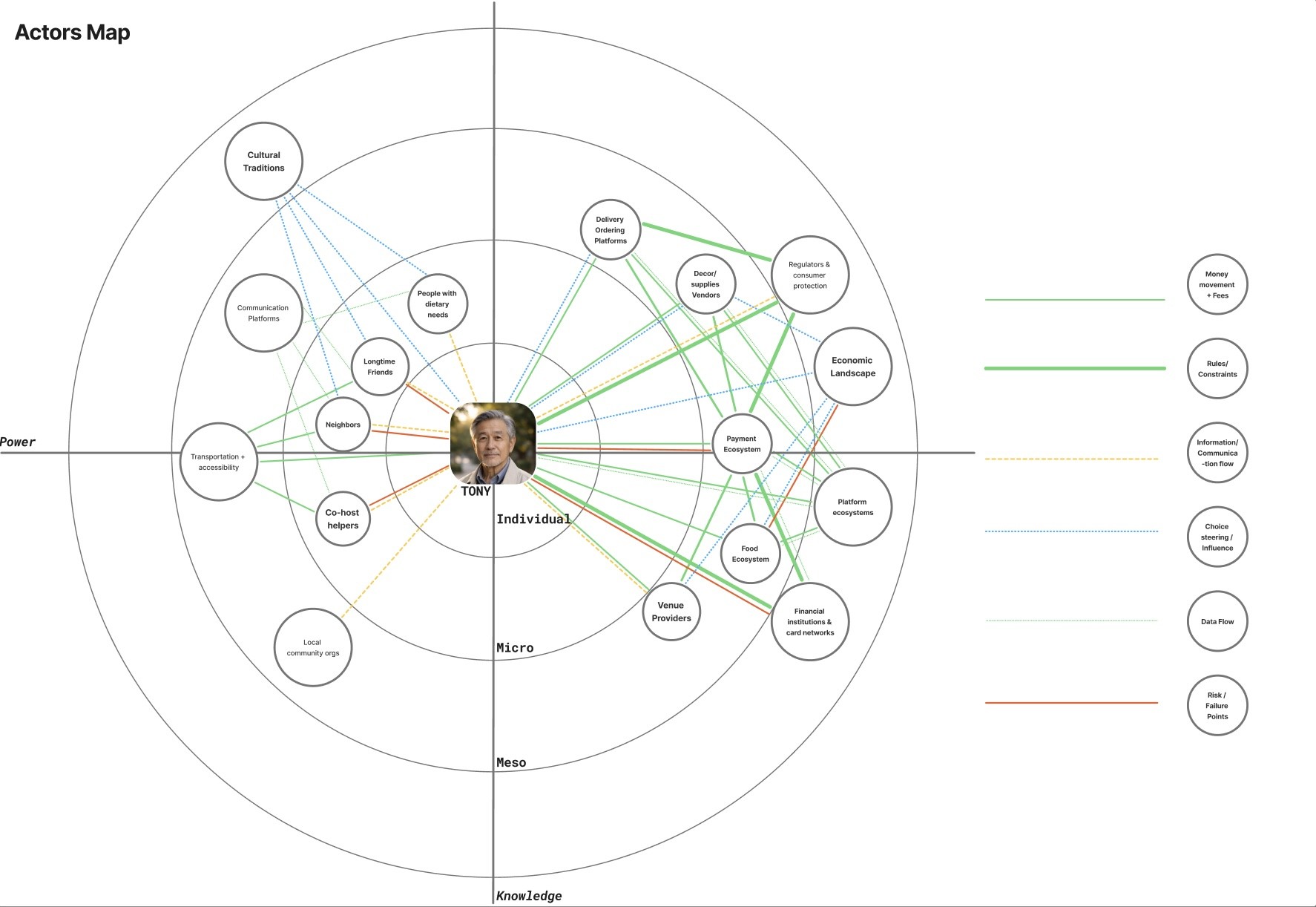
Actors Map Analysis
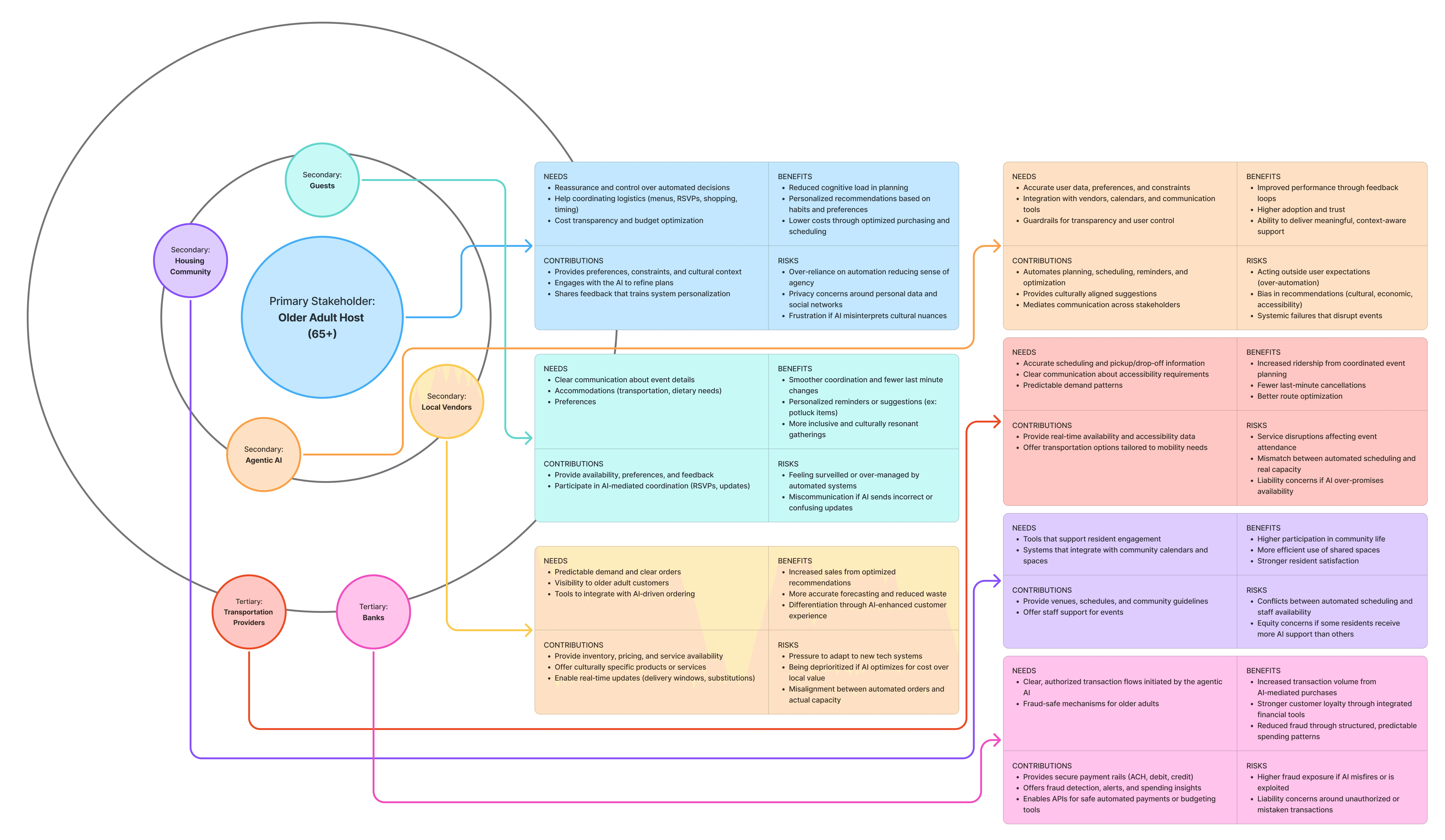
Stakeholder Map
Key Finding
Across six co-creation interviews, a consistent pattern emerged. Participants struggled most with ongoing dynamic tasks — tracking RSVPs as responses trickled in, adjusting shopping lists as headcount shifted, managing logistics across multiple platforms. The mental load compounded over time rather than resolving. And despite recognizing these inefficiencies, most participants had been managing them the same way for years. The opportunity seemed clear: reduce the coordination burden through automation.
FROM RESEARCH TO CONCEPTS
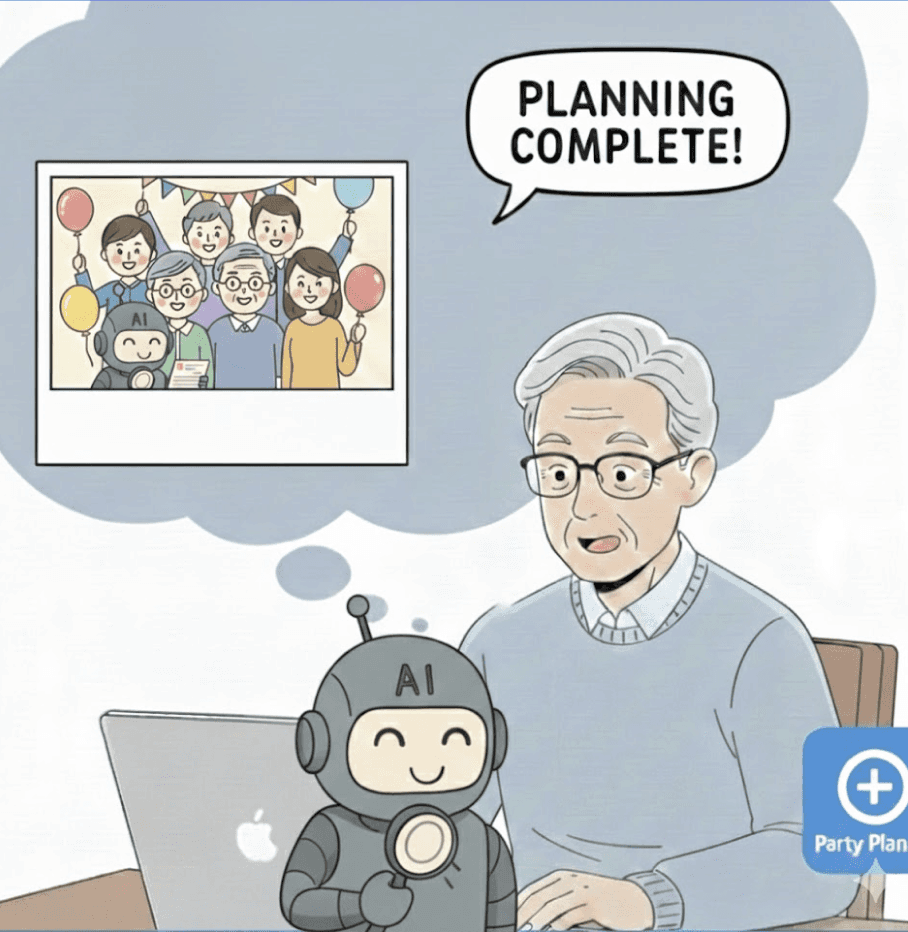
Smart Email
A passive agent that monitors your inbox to detect when a celebration is being planned. Drawing from past email data, it surfaces recommendations on food quantities, venue timing, and guest logistics, reducing the mental work of remembering what worked last time.
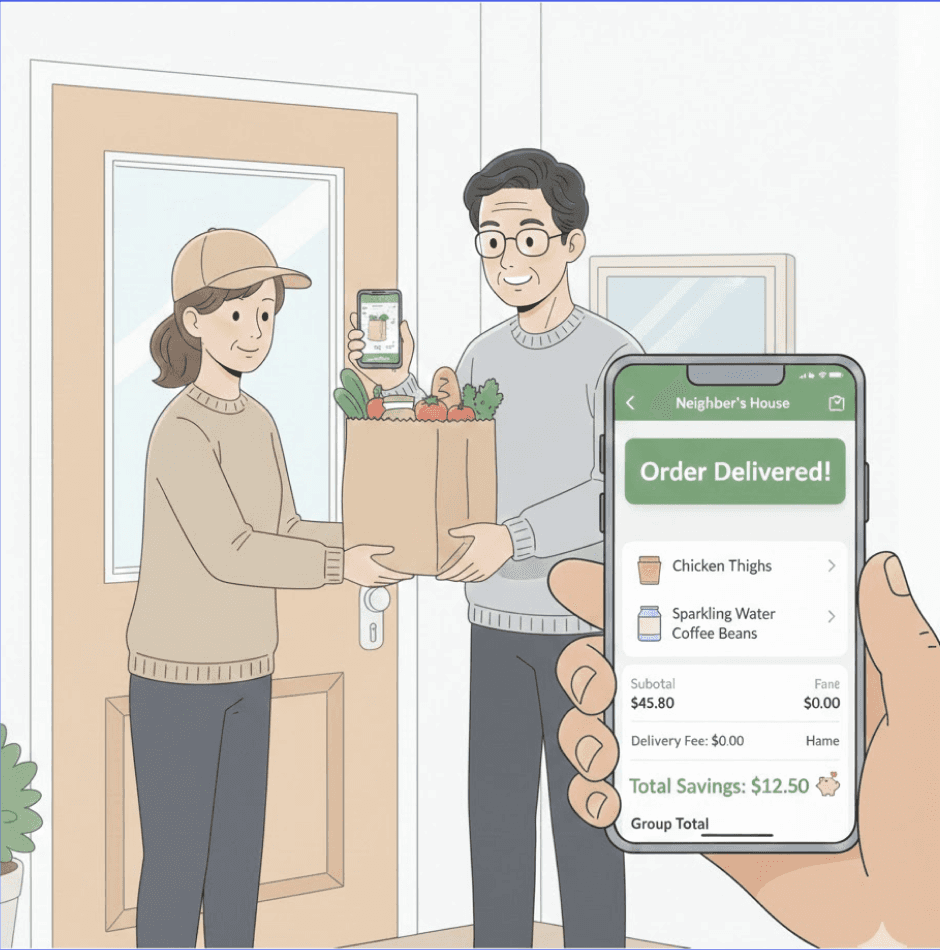
NeighborGoods
A group ordering service that pools demand across neighbors and community members to unlock wholesale pricing, without wholesale quantities. Users get what they need for one event, delivered, removing the burden of comparison shopping and bulk management.
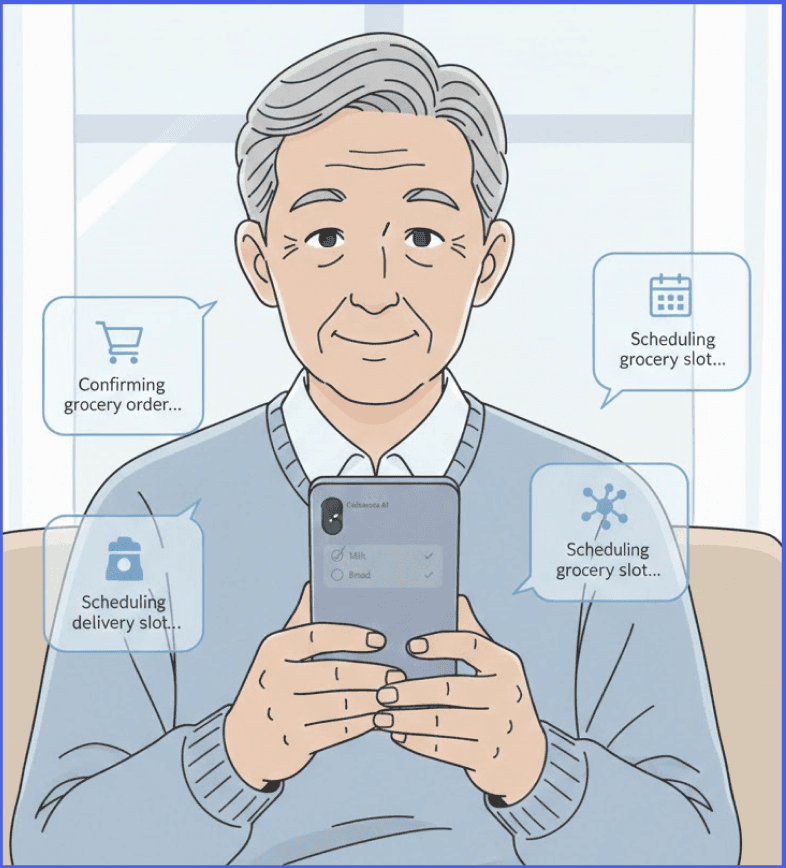
TaskTailor
A toggleable planning agent that lets users decide exactly what they hand off to AI and what they keep for themselves. From invitations to shopping to vendor coordination, each task can be delegated or retained, putting the reduction of effort entirely in the user's control.
THE PIVOT
Effort was the wrong problem
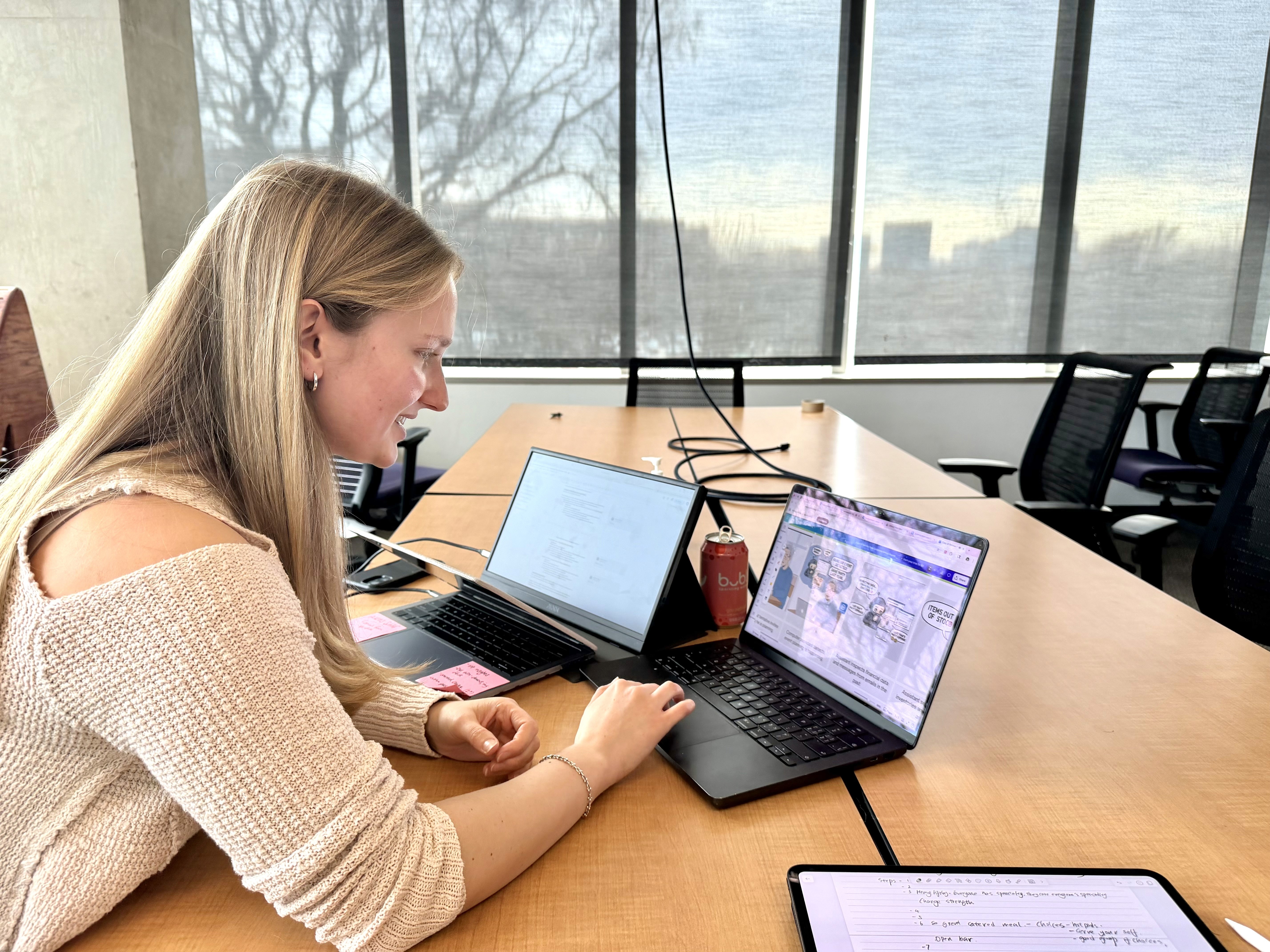
We pushed our concepts toward higher automation and took them into Dscout remote interviews to pressure test with users. The response was consistent resistance.
Smart Email felt invasive — users did not want an agent passively monitoring their inbox. Task Tailor's fully automated mode felt like a loss of control rather than a relief. And even for the tasks users found genuinely burdensome, a 10% improvement was not enough to justify handing anything over to a system they had no prior relationship with.
We had been designing around effort. Users were telling us the real issue was trust.
DScout interviews
FINAL RECOMMENDATIONS
Designing toward transferable strategy
Our final deliverable to JPMorgan Chase was not a finished service but a set of strategic learnings about how agentic AI can be introduced in ways people will actually adopt. Two principles emerged from our research that we believe extend well beyond celebration planning.
Takeaway 1: Familiar channels are the gateway to adoption
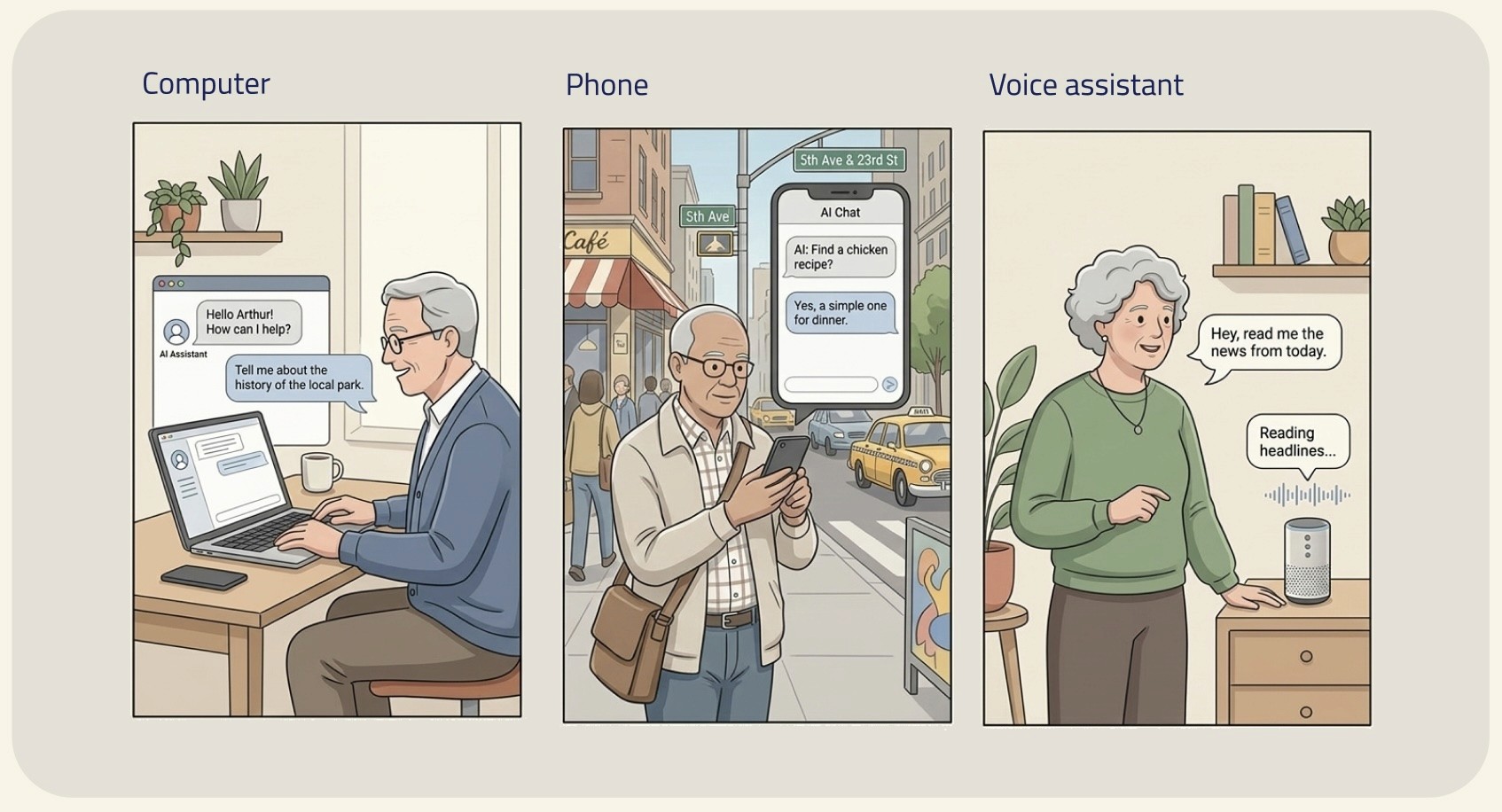
Interviewees already relied on LLMs for low-stakes tasks like fact checking and image generation. Adults 65 and older are particularly resistant to adopting new tools and platforms, making the entry point into agentic AI critical. Embedding features within environments they already trusted removed both the setup barrier and the trust gap that a new product would introduce. Agentic services should adapt within these existing environments rather than asking users to come to them. For JPMorgan, this meant agentic payment features had a stronger path to adoption when surfaced inside familiar platforms rather than launched as standalone products.
Takeaway 2: Users allow AI to do more as they successfully achieve more with it
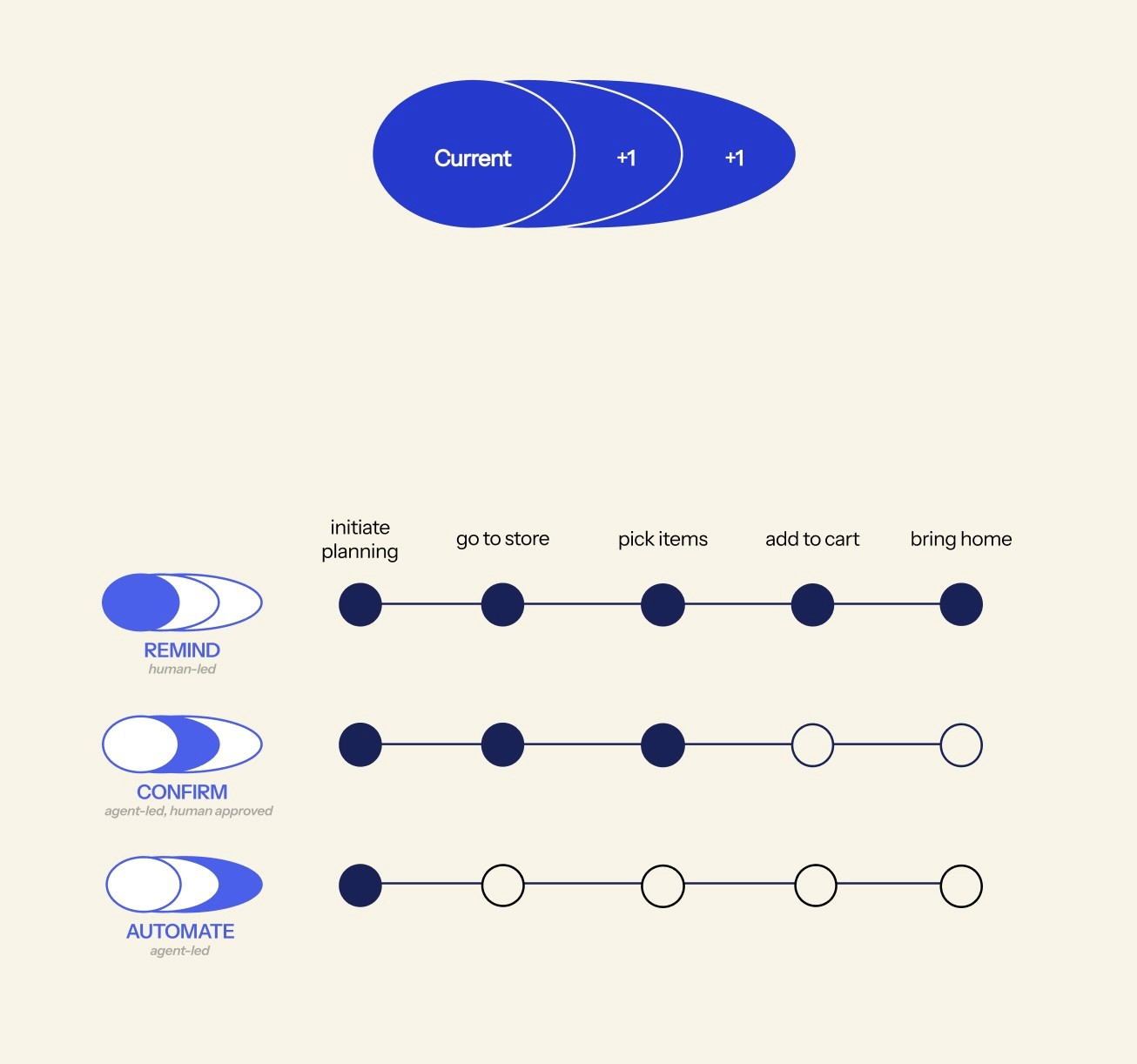
Interviewees could only imagine AI doing one step further than what it already does for them. Presenting fully automated features upfront installed fear rather than excitement, especially with adults 65+. The Plus One model proposes that AI should grow its capabilities in sequence with user confidence, moving from reminding, to confirming, to automating as trust accumulates through repeated successful interactions.
Want to learn more about my approach?