Designing for Wellbeing: What Campus Spaces Reveal About How Students Work
An independent research study examining how the design of informal campus spaces shapes student wellbeing — and what small changes could make meaningful differences.
My Role:
End-to-End Research Design
Mixed-Methods Synthesis
Design Recommendations
University of Maryland School of Architecture
Independent Study
Spring 2024
SUMMARY
The question: Do the informal spaces where students spend time between classes actually support their ability to focus, decompress, and feel comfortable — and if not, why?
The tension: Architecture training teaches designers to build the new, but the spaces students already occupy every day often go unexamined and their friction invisible until someone thinks to measure it.
The direction: Through behavioral observation and intercept interviews across three campus sites, this study identified specific design features that most directly shaped student wellbeing, and translated those findings into low-effort, high-impact recommendations.
BACKGROUND
From building design to human experience
I was trained as an architecture student to design within parameters, focusing on building the new. I became increasingly curious about the environments I was experiencing and learning in. I realized that while I could generate bold design ideas, I lacked the tools to evaluate how those designs actually impacted the people inside them.
Driven by that curiosity, I proposed and created my own independent study, advised by a professor in environmental psychology (the only research-based course in my graduating class).
My goal was to understand how informal environments in academic buildings supported students day to day, and to identify concrete opportunities for improvement in the spaces I knew best.
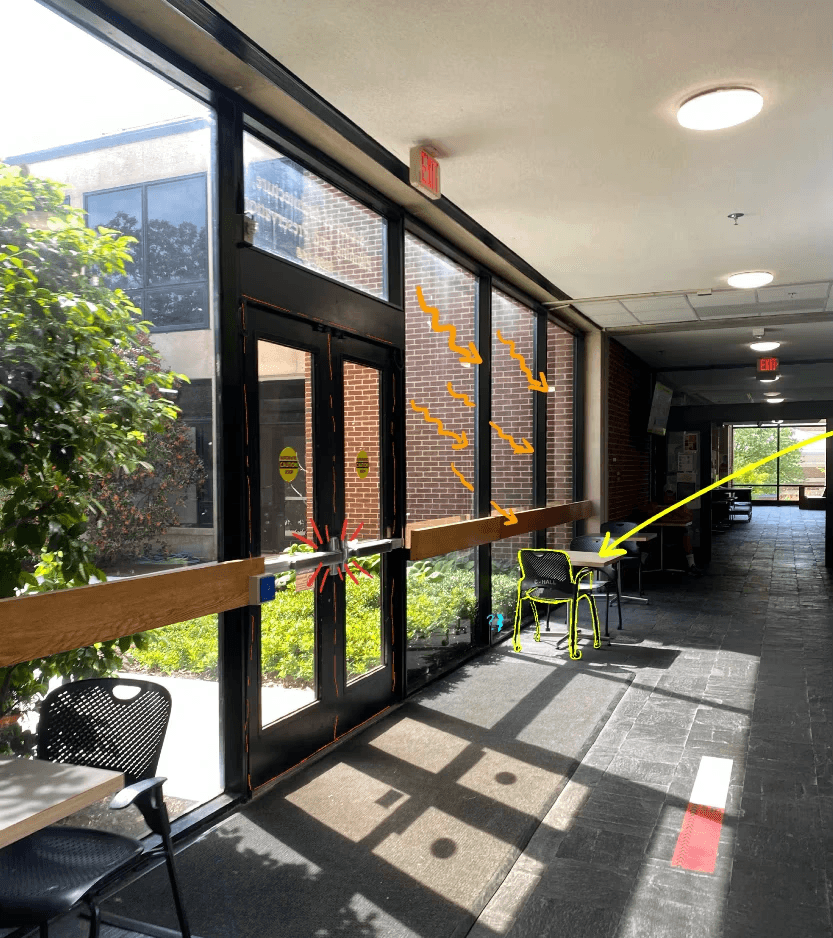
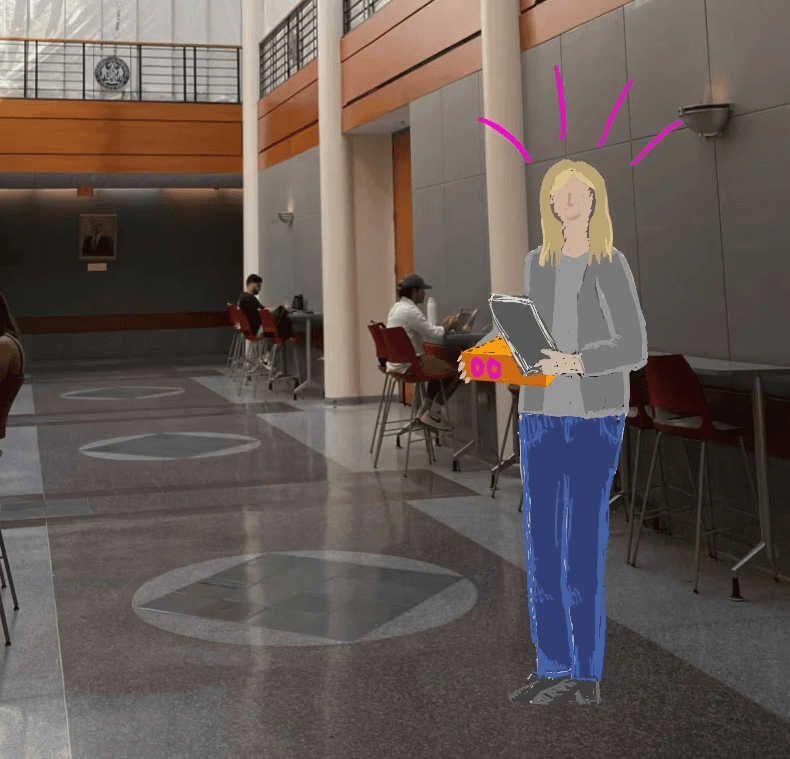
Studying in UMD's Architecture Building
-Feeling hot from the direct sunlight
You are Here
-Getting distracted from loud doors shutting
-Laptop dies from no outlet nearby
-Feeling uncomfortable due to exposure on all sides
RESEARCH PROCESS
Translating curiosity into research
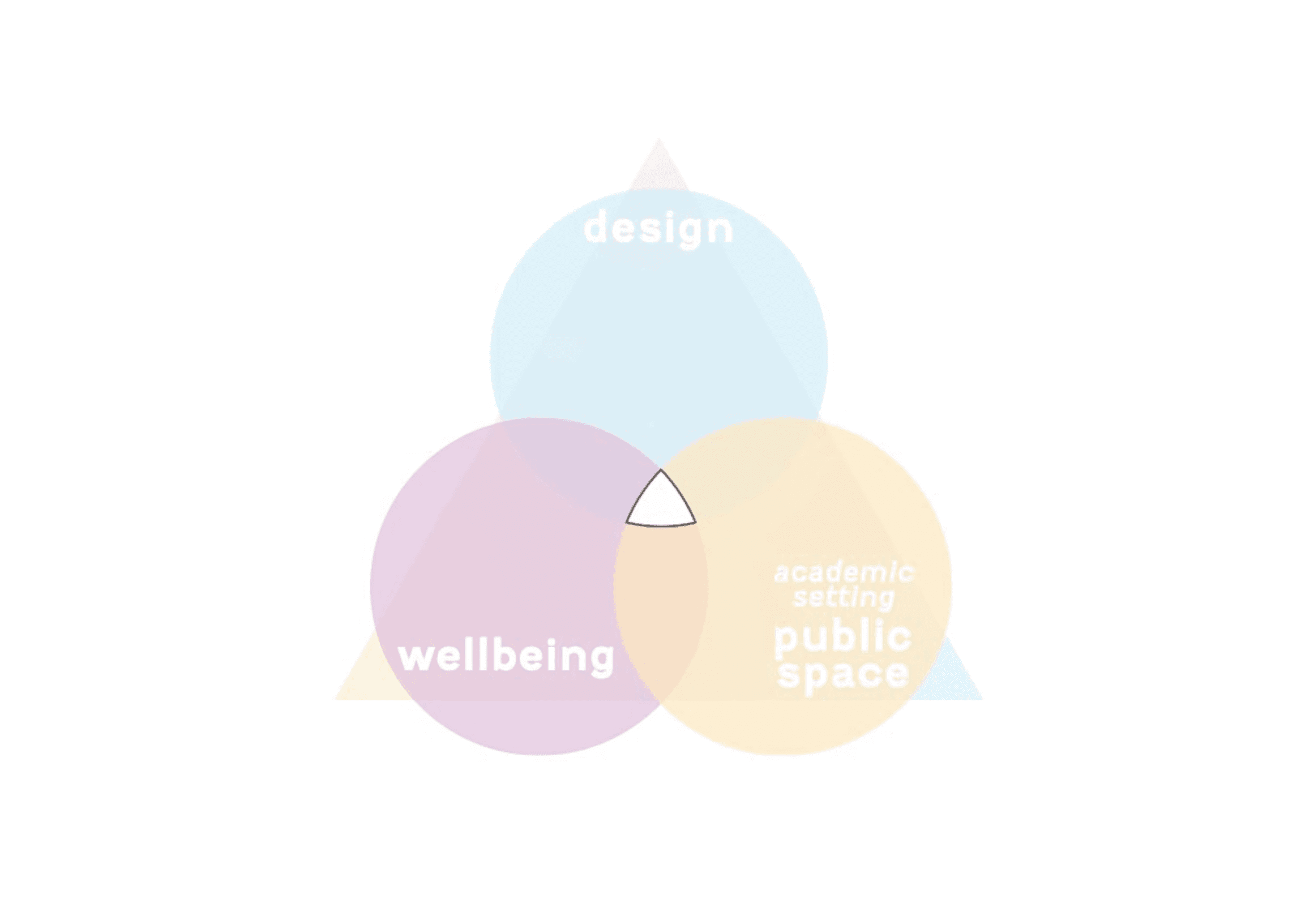
The study was grounded in Person–Environment Fit Theory, which explains that physical environments that meet users’ needs and most optimal. I evaluated five design feature categories:
Architectonic details
Spatial organization
Ambient conditions
Resources
Views
The study followed a multi-phase, mixed-methods research process combining observational and experiential data.
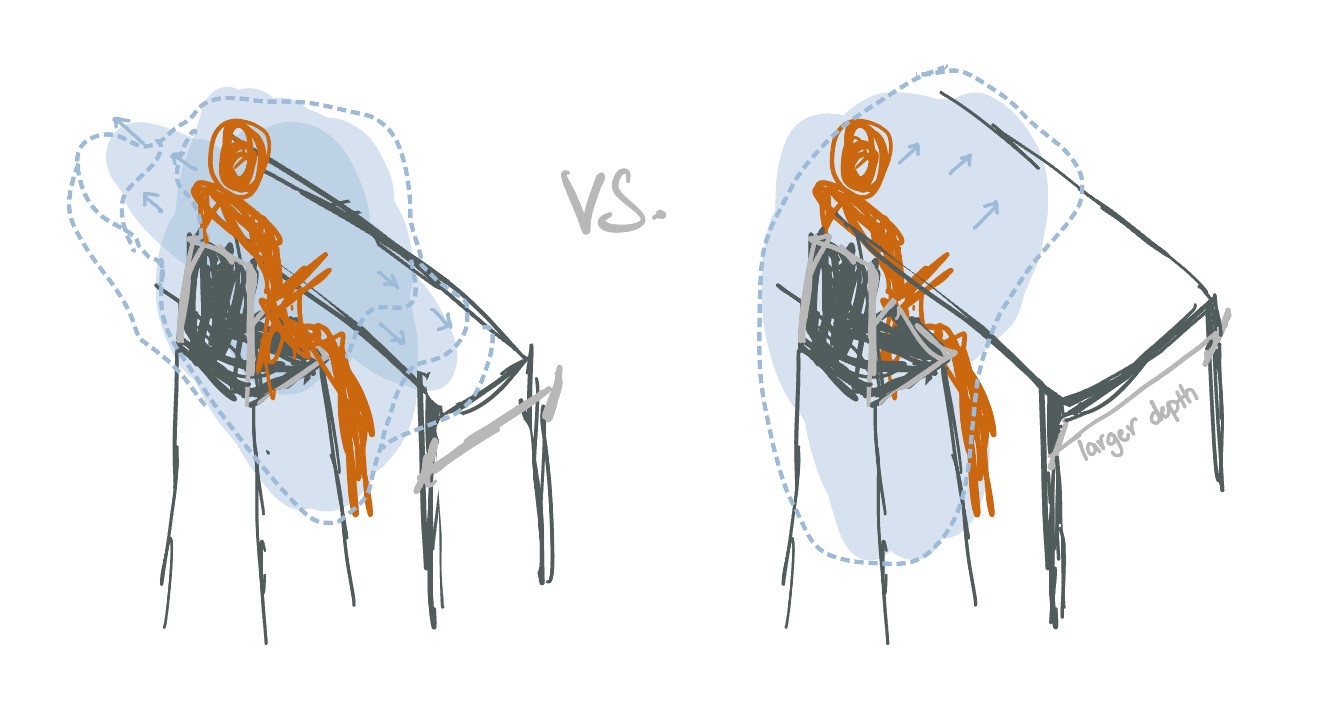
studies of furniture design and personal space
Methods
Behavior Mapping: recording 'screenshots' of what users are doing in a space, in equal increments
Intercept Interviews: approaching users in their context and requesting that they complete an online survey
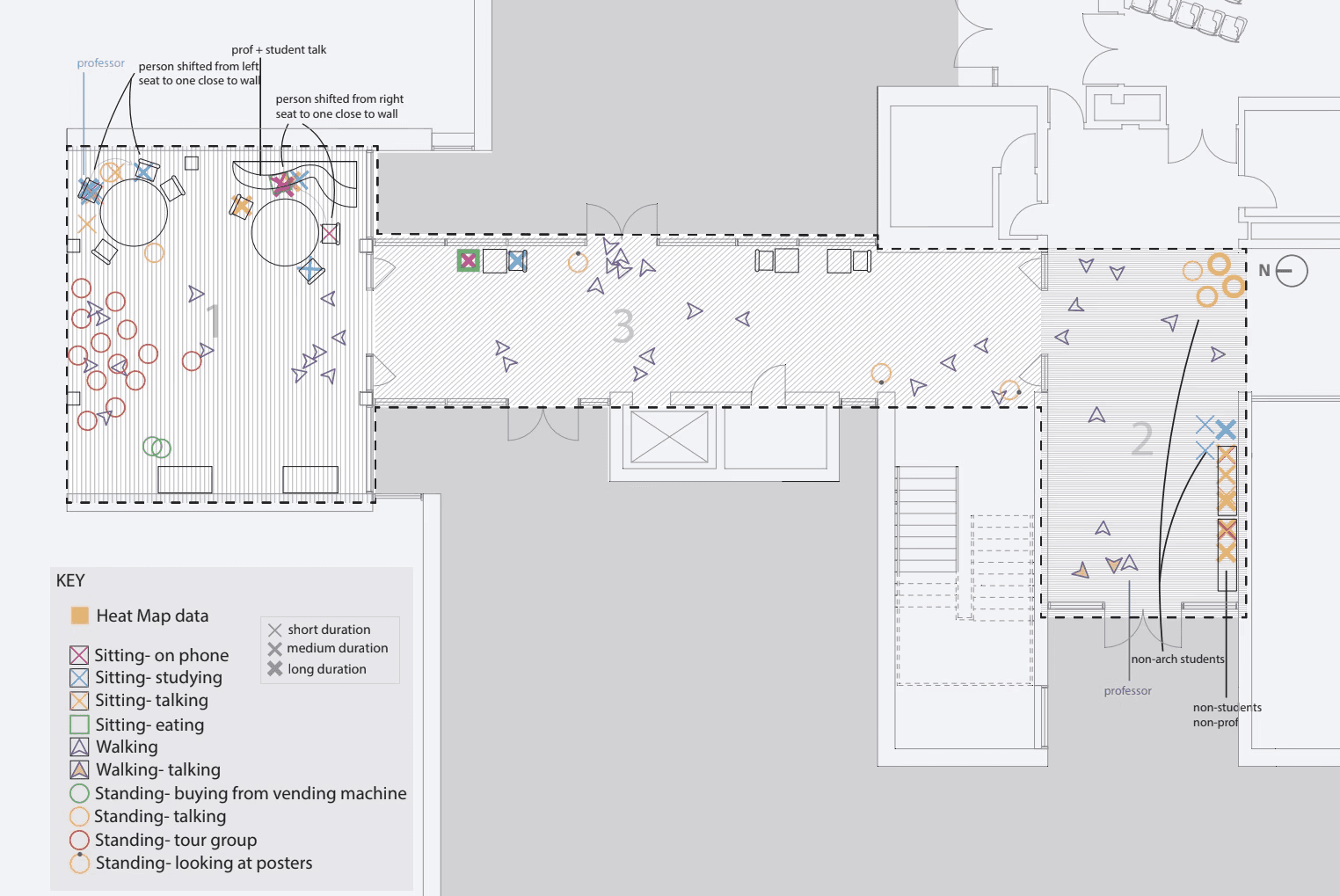
behavior maps
Stats
12 hours of behavior mapping to reveal patterns of use
120 intercept interviews to explore users’ perceptions of well-being in relation to five design categories
Quantitative behavior maps provided breadth into how spaces were used, and qualitative interviews provided depth on how design affected student experience.
intercept interview set-up
RESEARCH LEARNINGS
When ambient conditions were favorable, students chose informal spaces to study
Ample natural light, preferably from above (minimizing thermal discomfort)
Consistent, moderate background noise
Configurable seating with access to outlets
When ambient conditions were NOT favorable, students avoided these spaces
Highly exposed environments (e.g., glass corridors) reduced perceived comfort and willingness to dwell
Thermal variability and frequent circulation disrupted focus
Short-duration, transitional use (e.g., waiting, passing through) became the dominant behavior
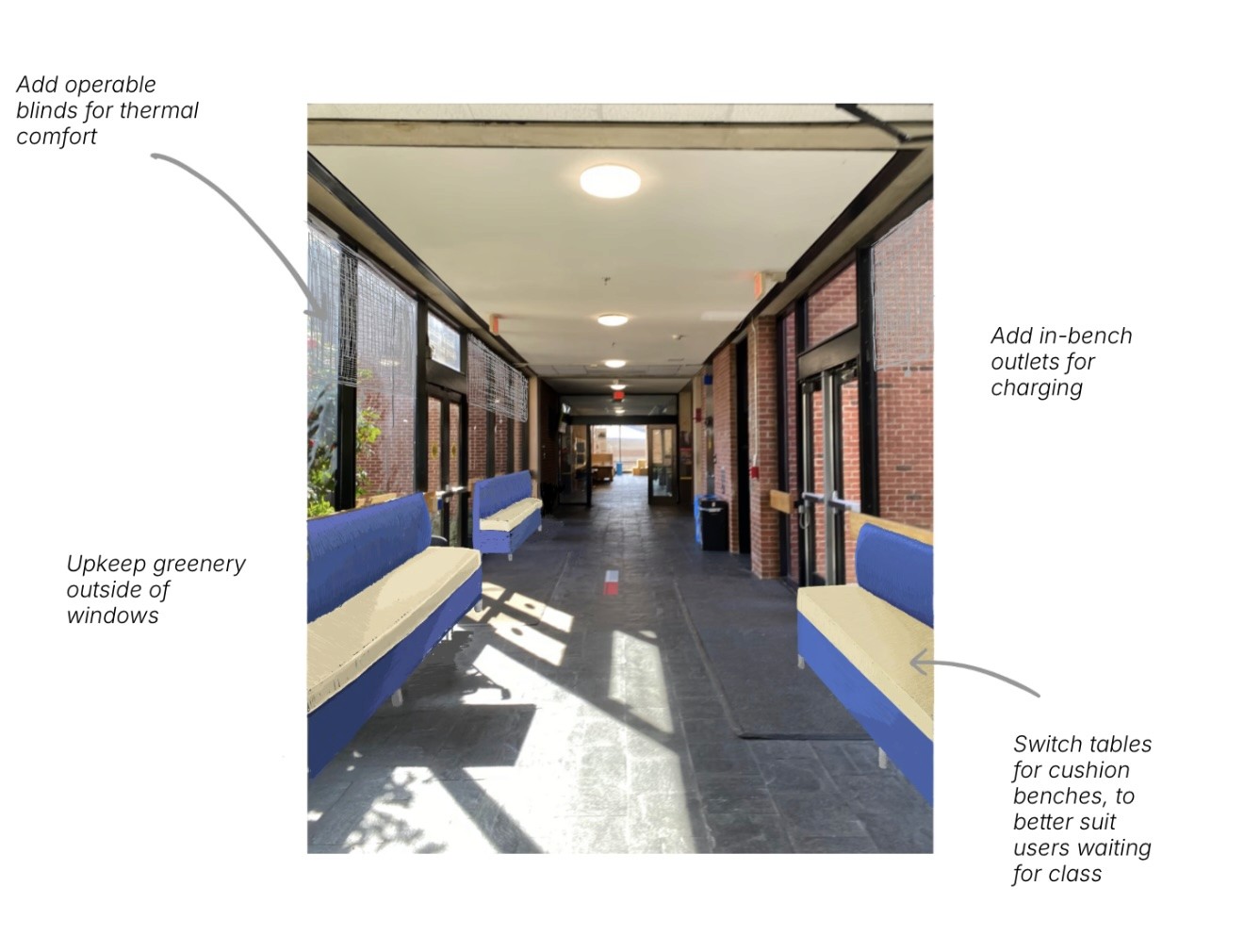
reframe the glass corridor as a transitional space with high-capacity, comfort-oriented seating
LEARNINGS
The study culminated in a design recommendations report to the School of Architecture. The proposals focused primarily on changes to furniture type and placement, and adjustments to improve ambient comfort.
By emphasizing low-effort adjustments rather than full redesigns, the project demonstrated how user research can guide continuous improvement. It also highlighted the potential of everyday spaces to enhance student experience when decisions are grounded in evidence.
Leading this self-directed study taught me the importance of curiosity, initiative, and persistence in research-driven design. I navigated the full research cycle—identifying unmet needs, defining a method, collecting and synthesizing complex data, and translating findings into actionable design opportunities.
At first, the volume and ambiguity of the data felt daunting, but that uncertainty became excitement. I learned to identify meaningful patterns, connect qualitative insights with quantitative evidence, and distill stories that revealed users’ real needs. The process strengthened my ability to move from raw data to clear, evidence-backed design direction.